

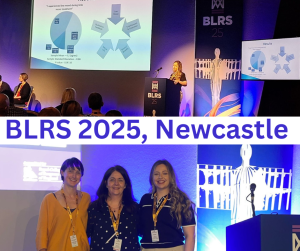
NOHC delegation presents At the 2025 British Limb Reconstruction Society Conference in Newcastle, UK
The National Orthopaedic Hospital Cappagh cares for patients of all ages undergoing complex limb reconstruction surgeries. The programme is challenging, consisting of surgery followed by months of lengthening with fixator frames, intramedullary lengthening nails, and comprehensive physiotherapy programmes. Younger patients often need repeated surgical procedures and postoperative care as they grow. A multidisciplinary team at NOHC conducted a retrospective study to evaluate limb reconstruction’s emotional and social impact on patients. Here is a summary of their findings, which were presented at the BLRS conference in March 2025.
Beyond the Procedure: Exploring the Emotional and Social Impact of Limb Reconstruction Surgery
Fionnuala Moran, Yvonne Devane, Christopher O’Brien, Louise McMahon, Thomas Donnelly
National Orthopaedic Hospital Cappagh, Dublin, Ireland
TITLE
Beyond the Procedure: Exploring the Emotional and Social Impact of Limb Reconstruction Surgery
INTRODUCTION
The aim of this retrospective study is to evaluate how adult patients’ emotional and social aspects of their lives were impacted throughout their limb reconstruction treatment. It includes quantitative data on their mood, stress, social life, and work/school impact, as well as qualitative feedback providing detailed insights into their experiences and suggestions for improvement.
MATERIALS & METHODS
27 adult patients were identified for taking part in this research. All had completed their limb reconstruction journey at the time of completing the survey, the analysis and results below are based on 12 responses. Anonymous surveys were completed which consisted of seven quantitative questions utilising a five-point Likert scale and one qualitative question. The results have been analysed using descriptive statistics, non-parametric tests and thematic analysis.
RESULTS
The distribution of the data indicated that 83.33% of participants agreed that they experienced low mood but patient’s agreed more strongly that they experienced stress or anxiety. The results for the impact of limb reconstruction on patients’ social life and work were polarized, patients who felt that their work/college was affected by limb reconstruction also felt that their social life was impacted. Qualitative feedback identified “support” as a theme in 50% of responses.
CONCLUSIONS
Limb reconstruction treatment significantly affects patients lives highlighting the need for comprehensive support systems. The data suggests that while the medical aspects of limb reconstruction treatment may be effective, there is a significant need for comprehensive support systems to address the emotional and psychological challenges faced by patients.